Your Customers Have Stopped Searching. They're Asking.
11,300 AI-search impressions in one month for a single Kathmandu business — and what it means for everyone else.
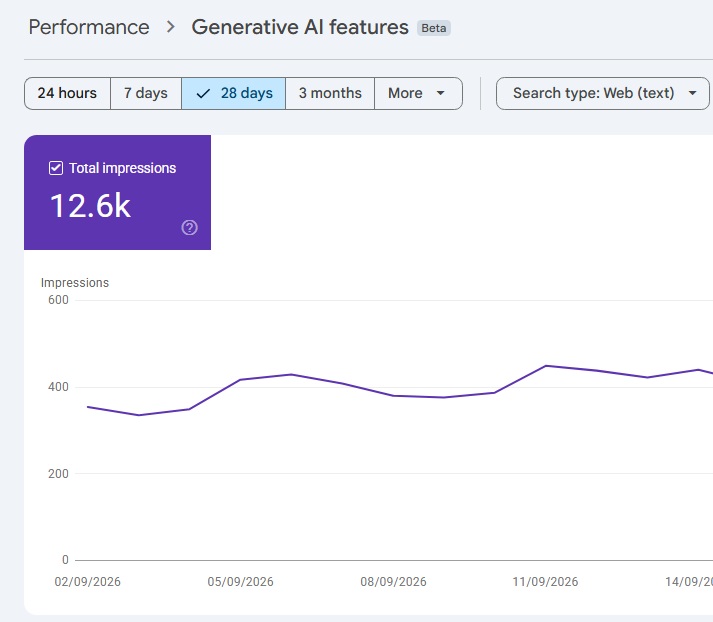
Last month, one of our clients appeared 11,300 times inside AI-generated search answers.
Not Google's blue links. The answer itself — the paragraph someone reads, trusts, and acts on, usually without clicking anything at all.
We started measuring this a few months ago, mostly out of curiosity. It is no longer a curiosity.
What Is Actually Changing
For twenty years, search worked one way. You typed a question. You got a list of links. You picked one.
That is still happening. But alongside it, something else now happens: you ask a question and get an answer. Google's own results often lead with an AI-written summary. ChatGPT, Gemini, Claude and Perplexity skip the list entirely and simply tell you.
For a business, the difference is enormous.
In the old model, your job was to get onto page one so a customer could choose you from a list. In the new model, there is no list. There is one answer, and either your business is named in it or it is not.
Being on page one of a result nobody scrolls to is a different thing from being inside the answer they read.
Why This Matters More in Nepal Than People Assume
It is tempting to treat this as something that happens in America and arrives here in five years. We do not think that is right, for three reasons.
Nepali customers are mobile-first. On a phone, an AI answer fills the screen. The links below it require a deliberate scroll that many people never make.
Our customers ask in mixed language. "Kathmandu ma best eye hospital kun ho" is a question, not a keyword. Traditional search handles that poorly. AI handles it well — which is exactly why people are shifting to it.
And almost nobody here has prepared for it. In most Nepali categories, the amount of clear, structured, factual information published about local businesses is very low. That is a problem for the businesses, and an opening for the ones who fix it first.
What Seems to Make a Business Appear in an AI Answer
We will be honest about our confidence level in a moment. But from what we have observed across our own clients, a few things stand out.
Clear, Factual, Well-Structured Information
AI systems assemble answers from information they can parse with confidence. Vague marketing copy gives them nothing to work with. A page that plainly states what you do, where you are, what it costs and who it is for gives them a great deal.
A Properly Maintained Google Business Profile
This matters more now, not less. Your hours, categories, services, photos and reviews are among the most structured, most trusted facts published about your business anywhere. We have written separately about how badly most Nepali businesses neglect this.
Being Mentioned by Other Credible Sources
This is the one most businesses are not thinking about. When a publication, a directory or an industry site writes about you, that reference travels into the material these systems learn from. You cannot optimise your way into an answer the way you once optimised your way up a page. Being genuinely written about appears to carry real weight.
Consistency
If your address, phone number and opening hours differ across your website, your Business Profile and three directories, you have given the system four conflicting facts. It will tend to trust whichever it finds most corroborated — and that may not be the correct one.
What Nobody Can Honestly Tell You Yet
This is the part most agencies will leave out, so we will say it plainly.
Nobody has a reliable formula for this. Not us, and not anyone selling you a guaranteed package. These systems do not publish their ranking logic, they change frequently, and what correlates with visibility this quarter may not next quarter.
The measurement is imperfect. We can see AI-search impressions in search data, and that is genuinely useful. It does not tell us the full picture of what a model says about a business when someone asks it directly.
And the results are not evenly distributed. Our restaurant client's 11,300 impressions came partly from being in a category people ask about constantly. A specialist B2B supplier would see very different numbers, and comparing the two would be meaningless.
What we are confident about is the direction. The share of searches that end in an answer rather than a list is growing, and businesses that have published clear factual information about themselves are the ones showing up in those answers.
Anyone who tells you more than that is guessing. Some of them are guessing with great confidence.
How to Start Measuring It Yourself
You do not need an agency to begin.
Open Google Search Console and look at your performance data. Depending on your setup, you may be able to see impressions attributed to AI-generated results. That number is your baseline.
Then do the simplest test available. Open any AI assistant and ask it the question your customer would ask. "What is a good dental clinic in Lalitpur?" "Where can I get a visa photo in Kathmandu?"
See whether you are named. Then ask it what it knows about your business specifically, and check whether what it says is actually correct.
That exercise takes ten minutes and tells you more about your position than any report.
The Question
Search did not stop working. It changed shape.
The businesses that will do well over the next few years are not necessarily the ones with the biggest budgets. They are the ones whose information is clear, current, consistent and published where it can be found.
So, the only question that matters:
If an AI were asked to recommend a business like yours in Kathmandu today — would it name you?
If you are not sure, that is worth finding out before your competitors do.
------------------
We have not named the client in this article. That is the same discretion any client of ours gets.
Tech101 has run search and digital marketing for Nepali businesses for over ten years, across healthcare, hospitality, education, banking and property. If you would like a free written review of how your business currently appears in both search and AI answers, get in touch — one page, no meeting required, no obligation.
FAQs
1. What Does It Mean to Appear in an AI-Generated Search Answer?
It means your business is named inside the answer an AI tool writes, rather than listed as a link below it. Google's AI summaries, ChatGPT, Gemini, Claude and Perplexity all answer questions directly, so a business is either mentioned in that answer or it is not.
2. How Can I Check Whether AI Tools Mention My Business?
Ask an AI assistant the question your customer would ask, such as "What is a good dental clinic in Lalitpur?", and see whether you are named. Then ask what it knows about your business and check that the details are correct. This takes about ten minutes.
3. Is SEO Still Worth Doing If People Are Getting Answers From AI?
Yes. Traditional search results are still used, and the things that help in AI answers overlap heavily with good SEO: clear, factual pages, an accurate Google Business Profile, and consistent business details. Search has changed shape, but it has not stopped working.
4. Can an Agency Guarantee My Business Will Appear in AI Answers?
No. AI systems do not publish how they choose what to mention, and they change often. Anyone selling a guaranteed AI visibility package is guessing. What an agency can do is improve the clarity, consistency and reach of the information published about your business.
5. Does My Google Business Profile Affect AI Search Results?
It appears to. Your hours, categories, services, photos and reviews are among the most structured and trusted facts published about your business. Keeping them complete and current gives AI systems reliable information to draw on.
6. Why Does AI Search Matter for Businesses in Nepal Right Now?
Nepali customers are mobile-first, and on a phone an AI answer fills the screen. They also ask in mixed Nepali and English, which AI handles better than traditional search. Few local businesses have prepared, so those who publish clear information first have an advantage.